

Getting to Know the History of Sewu Temple, a Buddhist Temple in Prambanan
The history of Sewu Temple is a fascinating part of Java's long history. Located in the Prambanan Temple complex , this Buddhist temple complex holds historical traces that convey a message of religious tolerance and cultural diversity that once flourished in Java.
The splendor of Sewu Temple is evident not only in its structure and architecture, but also in the story behind its construction. So, where is Sewu Temple located, who built it, and what was its function in the past? Read on for a complete explanation of the history of Sewu Temple below.
Where is Sewu Temple located?
In the middle of the Prambanan Temple area, there is a Buddhist temple complex that serves as a reminder that diversity has been part of Java's historical journey for centuries.
Sewu Temple stands not far from Prambanan Temple. Both are part of the same complex, located on Jl. Raya Solo–Yogyakarta, Kranggan, Bokoharjo, Prambanan District, Sleman Regency, Yogyakarta Special Region.
Entrance to Prambanan Temple includes Sewu Temple, Bubrah Temple, and Lumbung Temple. Sewu Temple itself is located about 800 meters north of Prambanan Temple. If you want to explore Prambanan and Sewu Temple more comfortably, InJourney Destination Management offers transportation options such as bicycles and various types of EVs, from electric bikes to golf carts.
History of Sewu Temple
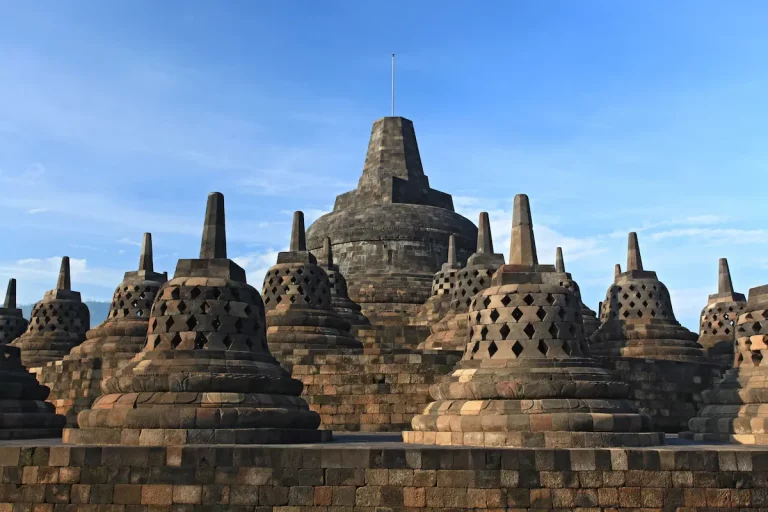
Sewu Temple is the second largest Buddhist temple complex after Borobudur Temple . Estimated to have been built in the 8th century AD, Sewu Temple is older than Prambanan Temple, which was built in the 9th century.
According to the Manjusrigrha Inscription, dated 792 AD, this complex was originally known as Prasada Vajrasana Manjusrigrha . Prasada means temple or shrine, while Vajrasana means the place where Vajras reign. Meanwhile, Manjusrigrha means the House of Manjusri, one of the Bodhisattvas in Buddhism.
The history of Candi Sewu holds a long story about the lives of Javanese people in the past. From its builders, the shape and layout of the temple complex, to its function, each aspect provides a valuable insight into the role of Candi Sewu during its time.
To get to know it better, here is the journey of Sewu Temple which can be traced through the history of its construction, structure, function, and rediscovery in the modern era.
Who Built Sewu Temple?
Based on the Kelurak Inscription (782 AD) and the Manjusrigrha Inscription (792 AD) which were discovered in 1960, Sewu Temple is estimated to have been built in the 8th century AD at the end of the reign of Rakai Panangkaran (the second king of the Ancient Mataram Kingdom), then continued by his successor, Rakai Panaraban.
Rakai Panangkaran's reign in Ancient Mataram lasted for 38 years (746–784 AD). In addition to Sewu Temple, Rakai Panangkaran also initiated the construction of other Buddhist-themed sites, namely Kalasan Temple (778) and the Ratu Boko site.
However, construction of Sewu Temple did not stop during the reigns of Rakai Panangkaran and Panaraban. Experts estimate that Sewu Temple was restored and expanded during the reign of Rakai Pikatan (the fourth king of the Ancient Mataram Kingdom).
Interestingly, Rakai Pikatan, from the Sanjaya Dynasty, married Pramodhawardhani from the Syailendra Dynasty. This is said to have motivated Rakai Pikatan to restore Sewu Temple, as a form of tolerance for his wife.
Ultimately, this marriage also had a positive impact on religious tolerance between Hindus and Buddhists in Java at that time.
Also read: Uncovering the Myth of Ratu Boko Palace: Legend or Historical Fact?
Sewu Temple Structure
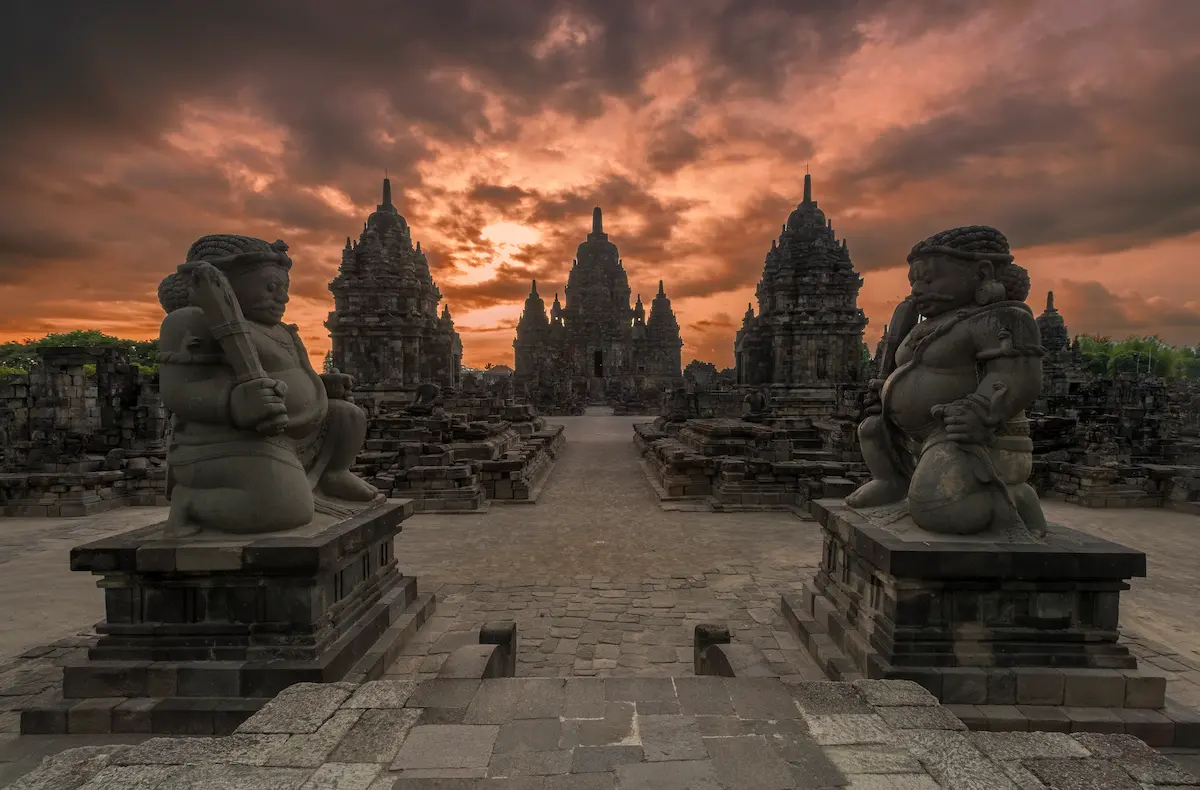
Candi Sewu comes from the Javanese term meaning "one thousand." However, the total number of temples is actually only 249, consisting of one main temple, eight flanking temples, and 240 ancillary temples. In addition to the temple buildings, there are also eight Dwarapala statues. Each entrance has two Dwarapala statues.
The main temple stands at the center of the complex and has four entrances divided according to the cardinal directions. It has five chambers, consisting of a main chamber surrounded by four other chambers. Its basic layout suggests the temple follows the vajradhatu mandala pattern.
The main temple, which is located in the center of the complex, is surrounded by four rows of ancillary temples, as well as eight flanking temples located between the second and third rows of ancillary temples.
Cosmology of Sewu Temple
In general, cosmology is defined as a picture of the universe. According to Hindu-Buddhist cosmology, the center of the universe is Mount Mahameru, surrounded by seven oceans and seven continents, depicted as Meru. Beyond this ring are four continents, each in the cardinal directions. In this cosmology, humanity resides on the southern continent, called Jambudvipa.
In the cosmology of Candi Sewu, the main temple at the center of the complex symbolizes Meru (the center of the world). Meanwhile, the fence and ancillary temples represent the seven continents, and the passageways between the ancillary temples represent the seven oceans.
Then, the four continents outside the ring are represented by Candi Kulon (west), Candi Lor (north), Candi Gana (east), and Candi Bubrah (south).
What was the Function of Sewu Temple in the Past?
The influence of Buddhism during Rakai Panangkaran's reign in Ancient Mataram was very strong. According to the Kelurak and Manjusrigrha inscriptions, the Sewu Temple was built by Rakai Panangkaran to worship the god Manjusri.
Manjusri is a Bodhisattva, a human who has attained Buddhahood and is therefore permitted to attain Nirvana. However, his compassion for humanity keeps him on earth to help humanity attain Buddhahood.
Manjusri is depicted with one face, two hands, and sitting cross-legged while carrying a lotus on top of which is a book. Then, his right hand acted Varada (giving grace).
This is written in lines 9–10 of the Manjusrigrha Inscription which reads, “This sacred building is a noble offering from Sri Nareswara who has incarnated into the divine realm.” This sentence describes Rakai Panangkaran who died in 792 AD.
Today, the primary functions of Sewu Temple, located within the Prambanan Temple complex, relate to preservation, education, research, and cultural tourism. Sewu Temple is also part of the Prambanan Temple Compounds, designated a UNESCO World Heritage Site on December 13, 1991.
Also read: The Story of Bandung Bondowoso and Roro Jonggrang, a Tragic Love
The Discovery and Restoration of Sewu Temple in the Modern Era
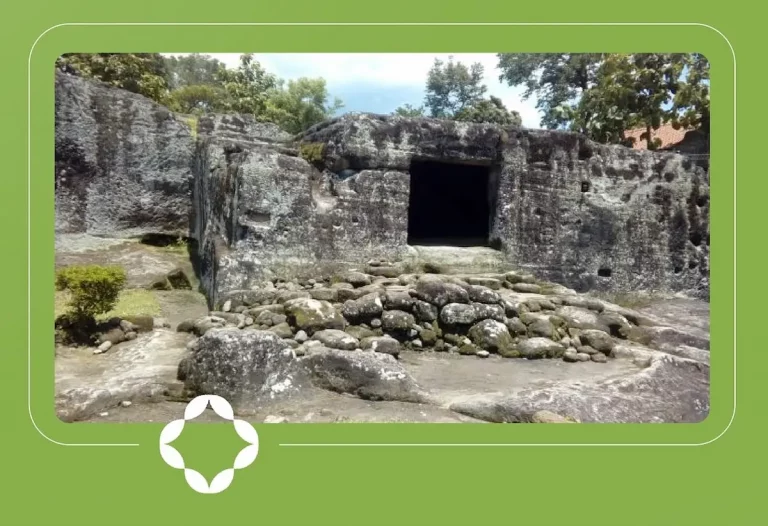
Sewu Temple was first discovered by Cornelius Antonie Lons, a Dutch trader, in 1733, in a damaged condition and buried under volcanic ash and undergrowth. Then, in 1806–1807, Herman C. Cornelius, a Dutch archaeologist, conducted research on one of the ancillary temples.
In 1981, the Indonesian government began the first restoration of Sewu Temple. This restoration process was completed in 1993. After that, Sewu Temple was further damaged by an earthquake and the eruption of Mount Merapi in 2006.
To date, the government is committed to accelerating the restoration of Sewu Temple and Prambanan Temple. This aims to preserve cultural heritage and establish them as cultural centers that positively impact the community.
Plan Your Visit to Sewu Temple Now!
If you're looking for a unique experience in the Prambanan Temple area, Sewu Temple is a great destination. Especially on Mondays, when the three main temples, or the Trimurti Temple complex, are closed for maintenance, you can still explore Sewu Temple and get a closer look at the magnificent Buddhist temple complex located nearby.
Don't miss this opportunity to learn about Sewu Temple, its history, architecture, and cosmological significance. Plan your visit and enjoy a journey through one of the most important cultural heritage sites in the Prambanan area.
Secure your entry tickets to Prambanan Temple Tourism Park now, available through InJourney Destination Management's official ticketing website . You can also take advantage of the PAYDAY TREAT promo: Buy 1 Get 1 for a 50% discount on two tickets. Don't miss out on this special promotion!
Also read: Revealing the Myths of Prambanan Temple: Is It True That Couples Can Break Up?